



Inside the Ink: Why Pulse Length Decides How Fast a Tattoo Comes Off

Inside the Ink: Why Pulse Length Decides How Fast a Tattoo Comes Off
Content of this Paper
↑
Key Takeaways
- Picosecond lasers use ultra-short pulses to fragment tattoo ink through photoacoustic effects, helping reduce heat transfer to surrounding skin.
- Phantom™ delivers pulses as short as 280 picoseconds, with black-ink tattoos typically requiring 4 to 8 sessions, depending on the tattoo and individual response.
- Pulse duration matters throughout treatment. Shorter pulses may work better on dense ink, while longer picosecond pulses can help target residual pigment.
- Laser treatment breaks ink into smaller particles, but the immune system clears them over the following weeks through macrophage activity and lymphatic drainage.
- Fitzpatrick IV–VI skin types require careful wavelength and fluence selection, with 1064 nm commonly used to reduce epidermal melanin absorption.
- Scar tissue, layered tattoos, and cover-ups may require specialised treatment protocols, including adjustments to laser settings and treatment approaches.
- Aftercare matters. Limiting UV exposure, avoiding smoking, staying hydrated, and reporting photosensitising medications can support safer treatment and recovery.
In brief: A tattoo removal laser does not burn ink away. It fires a flash of light so brief that a pigment particle takes in energy faster than it can pass it on, and that trapped energy turns into pressure that cracks the particle apart from within.
Done at picosecond speed, almost none of the energy reaches the skin around it. Phantom™ fires in as little as 280 picoseconds, which is the main reason tattoos at our King’s Cross clinic typically clear in 4 to 8 sessions where other clinics quote 10 to 20.
The Problem Your Immune System Has Been Failing to Solve
The day you were tattooed, your body began trying to remove the ink. It has never stopped. The pigment sits 1 to 3 mm down, held inside fibroblasts and macrophages in the dermis as solid granules rather than a dye, and the reason those granules are still there is simple: they are too big for the lymphatic system to carry away.
That makes removal a question of size before it is a question of colour. Measured granules mostly fall between 10 and 100 nm across, and a heated granule of that size needs somewhere between 0.1 and 10 nanoseconds to lose about half its energy to the tissue around it. Break the granules into pieces small enough to be collected, and the clearance your immune system has been attempting for years finally completes.
The rule that makes this possible is selective photothermolysis: pick a wavelength the ink absorbs and the skin does not, and deliver it in a pulse shorter than the time the ink needs to cool. The target is destroyed; everything around it is left intact. The StatPearls reference on laser tattoo removal explains how that rule drives wavelength and device choice across skin types.
For the wider picture on cost, timelines and how to choose a clinic, our complete guide to safe and effective tattoo removal in London covers the ground this paper does not.
Two Clocks Are Running Inside Every Pigment Granule
“The laser breaks up the ink” is the usual explanation, and it is true without explaining anything. It does not tell you why one clinic finishes a design in six sessions while another stalls at twelve, or why darker skin blisters under one machine and not another, or why pulse duration leads every manufacturer’s specification sheet. The answer lies in what happens during the fraction of a second the pulse is on.
When a granule absorbs the pulse, its temperature rises almost instantly. What happens to that heat depends on two timescales, and they are not the same.
The first is thermal relaxation. If the pulse ends before the granule has had time to conduct heat outward, the heat is confined inside it rather than spreading into collagen, capillaries and melanocytes. That is thermal confinement.
The second is stricter. A pressure wave needs a finite time to cross a particle. If the pulse is shorter than that crossing time, the granule cannot expand fast enough to relieve the pressure building inside it, so thermoelastic stress climbs until the particle fractures. That is stress confinement, and it is the condition that turns a heating event into a mechanical one.
Modelling at Lawrence Livermore National Laboratory reached exactly this conclusion: pigment fragmentation is photoacoustic rather than thermal, shorter pulses break particles more efficiently for the same energy, and the ideal pulse sits between 10 and 100 picoseconds.
The Arithmetic Behind “Shockwaves, Not Heat”
The phrase gets repeated a great deal, often by people who could not say what it means. It does not mean heat is absent. You cannot generate an acoustic wave in a solid without heating it very quickly first. The real question is where the heat ends up and for how long.
Sound moves through soft tissue at about 1,540 metres per second. At that speed, a pressure wave crosses a 100 nm particle in roughly 65 picoseconds. A standard Q-switched pulse of 5 nanoseconds is around 75 times longer than that. During a pulse that long, the particle expands, releases its internal stress, and dumps most of what remains into the dermis as heat.
Bring the pulse under 300 picoseconds and the balance shifts. The particle is now close enough to the confinement limit that the same energy goes into fracturing it instead. A 2025 review in Applied Sciences identifies this photomechanical effect as the main way picosecond pulses fragment ink beneath the skin, with the particle breaking once its internal stress crosses a critical value.
So the slogan is about destination. Energy starts as heat inside the granule in every case. With a short enough pulse, it is spent shattering pigment; with a long one, it is spent cooking the surrounding tissue. That difference is the line between a clean clearance and the blistering, texture change and pigment damage that give the procedure its bad reputation elsewhere.
Three Device Classes Against the Same Physics
The table sets each class of equipment against the roughly 65 picosecond confinement window for a 100 nm particle.
The trend runs in one direction. Shorter pulses convert more of the delivered energy into mechanical work on the ink and waste less of it heating the skin. That is the whole case for Pico laser tattoo removal in London over older nanosecond systems, and it is why two clinics quoting for the same tattoo can give session estimates that differ by a factor of two or three.
The Right Pulse in Session One Is the Wrong Pulse in Session Six
Most specialists treat pulse duration as a fixed property of the machine. It should be treated as a variable that changes with the tattoo.
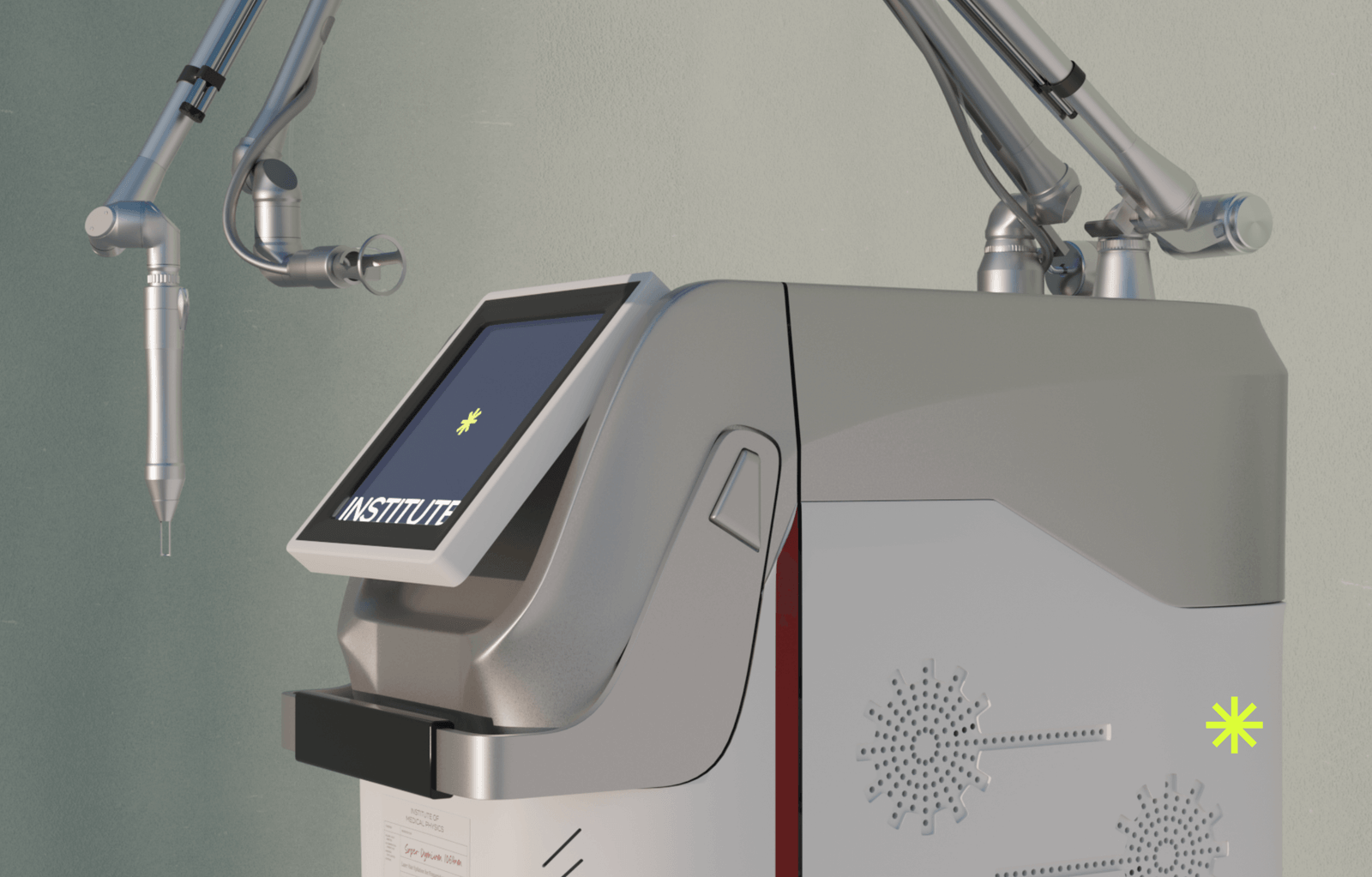
Phantom™ was developed in our research laboratory in San Marino. It consists of eight laser platforms spanning nine therapeutic wavelengths, with a fastest pulse of 280 picoseconds and a peak power of 2.79 gigawatts. The Phantom™-Pico component alone contains four distinct picosecond architectures, and over a course of treatment we move between them deliberately.
At the start, the ink is dense, the particles are large and the pigment is tightly packed. A pulse under 300 picoseconds produces the highest peak acoustic pressure against that kind of target and does the most useful damage.
Five or six sessions later, the material left behind is different: smaller fragments, scattered more widely, often partly wrapped in fibrous tissue, absorbing light differently than the original ink did. Against that residue, a 750 picosecond pulse reliably outperforms the faster one, because acoustic energy couples into a changed target by different rules.
A clinic with one system cannot follow the tattoo as it changes. It keeps applying a single pulse length to a target that has moved on, which is why so many people arrive at our London tattoo removal clinic after plateauing at eight or ten sessions somewhere else. It is also the reason layered and cover-up tattoos respond so differently from single-pass work.
The Laser Removes Nothing
This point is skipped in almost every explanation of the procedure: the laser prepares ink for removal and does nothing else. Fragmentation is the first step. Removal is immunological. Macrophages swallow the fragments and the lymphatic system drains them away over the following weeks.
The white frosting that appears during treatment is often described as bleaching. It is not. It is gas and cavitation forming in the tissue, the visible trace of the acoustic event, and it fades within minutes.
Because clearance is biological, the gap between sessions is a clinical decision rather than a scheduling one. Most clinics leave 6 to 8 weeks because they have nothing in place to speed clearance along. We pair every session with a biological therapy protocol that stimulates macrophage activity at the site, which is what makes our 4-week interval medically defensible rather than simply quicker.
Darker Skin, Scarred Skin and What Happens When Something Goes Wrong
Melanin absorbs light strongly across the visible and near-infrared range, so in darker skin the epidermis competes with the ink for every pulse. On a photothermal system, the energy melanin absorbs is deposited as heat exactly where it does the most damage, producing hyperpigmentation, hypopigmentation or outright burns.
A photomechanical mechanism shrinks that risk considerably without removing it altogether. Any doctor-led tattoo removal clinic in London should be able to tell you, before you book, what it does when a complication develops.
Our answer is a protocol built around 1064 nm as the primary wavelength at conservative fluences for Fitzpatrick IV to VI, backed by two in-house rescue routes: a 1927 nm Thulium protocol for post-inflammatory hyperpigmentation, and a 308 nm excimer laser combined with a topical calcineurin inhibitor to restore pigment where hypopigmentation has appeared.
Scar tissue poses a separate problem. Fibrosis physically traps ink and dampens the acoustic wave before it reaches the pigment. For those cases we use a stacking protocol: fractional CO₂ opens microscopic channels through the scar, and the picosecond pulse is delivered through them within five minutes, before inflammation closes the channels again.
None of this is decided by looking at the tattoo. Every consultation starts with subdermal acoustic imaging, an ultrasound of the tattoo itself, which shows ink depth, variations in density and buried scar tissue that no visual inspection can reveal. The protocol is written around what is actually there.
The Session Itself, and the Four Things You Control
A session lasts 15 to 30 minutes depending on the size of the tattoo. The sensation is brief and most often compared to an elastic band flicked against the skin, sharper over bone and gentler over fleshier areas. Cooled-air analgesia is standard, topical anaesthetic is available, and a physician can administer a local injection where needed.
Between sessions, four things make a measurable difference to the outcome, and all four are in your hands rather than ours.
- Photograph the tattoo every month in the same light and from the same position. Fading is slow and memory is a poor judge of it. Objective images are the only reliable way to spot a plateau early enough to change the protocol.
- Keep ultraviolet light off the area. A tan raises melanin in the epidermis, which forces us to lower the fluence and slows the entire course.
- Support the clearance process. Hydration, movement and not smoking all affect how efficiently macrophages transport fragments away, and that transport, not the laser, is the step that limits the pace of removal.
- Tell us about photosensitising medication. Isotretinoin, some antibiotics and certain herbal preparations change how your skin responds, and the settings need to reflect that.
Patients in treatment have direct WhatsApp access to the clinical team between visits. An unexpected blister gets a doctor’s answer the same day, not a callback from reception.
Frequently Asked Questions
What is actually happening when a laser removes a tattoo?
The laser delivers a pulse shorter than the time an ink particle needs to shed the energy it absorbs. With nowhere to go, that energy becomes internal pressure, and the particle fractures. Over the following weeks, immune cells collect the fragments and carry them away. The laser breaks the ink; your body disposes of it.
Is laser tattoo removal a heat-based treatment?
Heat starts the process but does not do the removing. The pigment heats extremely fast, and because a picosecond pulse ends before that heat can spread, the energy becomes an acoustic pressure wave that shatters the particle. Very little thermal energy reaches the surrounding skin, which is why burns and scarring are far less common than with nanosecond machines.
Picosecond or nanosecond: what is the real difference?
A nanosecond Q-switched pulse runs 5,000 to 10,000 picoseconds, long enough for the particle to expand and vent its stress while the pulse is still on, so much of the energy leaks away as heat. A picosecond pulse of 280 to 750 picoseconds traps the energy and breaks the pigment mechanically. The practical result is smaller fragments, quicker immune clearance and fewer appointments.
Does laser tattoo removal count as surgery?
No. Nothing is cut, removed or stitched, and the skin barrier is not deliberately opened, so the procedure is non-invasive. It is still a medical procedure, though, and it belongs under physician supervision, especially on darker skin or on tattoos that have already been treated elsewhere.
How many appointments will I need?
Most black-ink tattoos treated with Phantom™ clear in 4 to 8 sessions at 4-week intervals. Colour, layered work and cover-ups generally take longer, and tattoos that have been through a previous course vary widely depending on what that course did to the tissue. Our paper on how many sessions tattoo removal takes goes through this by ink type.
Can this method be used safely on darker skin?
Yes, provided a clinician matches the wavelength and fluence to the skin type. At 1064 nm, melanin absorbs relatively little and the light penetrates deeply, which makes it the appropriate first choice for Fitzpatrick IV to VI. The danger comes not from the technology but from operators who cannot assess skin type properly or treat a pigment complication if one occurs.

Inside the Ink: Why Pulse Length Decides How Fast a Tattoo Comes Off


Key Takeaways
- Picosecond lasers use ultra-short pulses to fragment tattoo ink through photoacoustic effects, helping reduce heat transfer to surrounding skin.
- Phantom™ delivers pulses as short as 280 picoseconds, with black-ink tattoos typically requiring 4 to 8 sessions, depending on the tattoo and individual response.
- Pulse duration matters throughout treatment. Shorter pulses may work better on dense ink, while longer picosecond pulses can help target residual pigment.
- Laser treatment breaks ink into smaller particles, but the immune system clears them over the following weeks through macrophage activity and lymphatic drainage.
- Fitzpatrick IV–VI skin types require careful wavelength and fluence selection, with 1064 nm commonly used to reduce epidermal melanin absorption.
- Scar tissue, layered tattoos, and cover-ups may require specialised treatment protocols, including adjustments to laser settings and treatment approaches.
- Aftercare matters. Limiting UV exposure, avoiding smoking, staying hydrated, and reporting photosensitising medications can support safer treatment and recovery.
In brief: A tattoo removal laser does not burn ink away. It fires a flash of light so brief that a pigment particle takes in energy faster than it can pass it on, and that trapped energy turns into pressure that cracks the particle apart from within.
Done at picosecond speed, almost none of the energy reaches the skin around it. Phantom™ fires in as little as 280 picoseconds, which is the main reason tattoos at our King’s Cross clinic typically clear in 4 to 8 sessions where other clinics quote 10 to 20.

The Problem Your Immune System Has Been Failing to Solve
The day you were tattooed, your body began trying to remove the ink. It has never stopped. The pigment sits 1 to 3 mm down, held inside fibroblasts and macrophages in the dermis as solid granules rather than a dye, and the reason those granules are still there is simple: they are too big for the lymphatic system to carry away.
That makes removal a question of size before it is a question of colour. Measured granules mostly fall between 10 and 100 nm across, and a heated granule of that size needs somewhere between 0.1 and 10 nanoseconds to lose about half its energy to the tissue around it. Break the granules into pieces small enough to be collected, and the clearance your immune system has been attempting for years finally completes.
The rule that makes this possible is selective photothermolysis: pick a wavelength the ink absorbs and the skin does not, and deliver it in a pulse shorter than the time the ink needs to cool. The target is destroyed; everything around it is left intact. The StatPearls reference on laser tattoo removal explains how that rule drives wavelength and device choice across skin types.
For the wider picture on cost, timelines and how to choose a clinic, our complete guide to safe and effective tattoo removal in London covers the ground this paper does not.
Two Clocks Are Running Inside Every Pigment Granule
“The laser breaks up the ink” is the usual explanation, and it is true without explaining anything. It does not tell you why one clinic finishes a design in six sessions while another stalls at twelve, or why darker skin blisters under one machine and not another, or why pulse duration leads every manufacturer’s specification sheet. The answer lies in what happens during the fraction of a second the pulse is on.
When a granule absorbs the pulse, its temperature rises almost instantly. What happens to that heat depends on two timescales, and they are not the same.
The first is thermal relaxation. If the pulse ends before the granule has had time to conduct heat outward, the heat is confined inside it rather than spreading into collagen, capillaries and melanocytes. That is thermal confinement.
The second is stricter. A pressure wave needs a finite time to cross a particle. If the pulse is shorter than that crossing time, the granule cannot expand fast enough to relieve the pressure building inside it, so thermoelastic stress climbs until the particle fractures. That is stress confinement, and it is the condition that turns a heating event into a mechanical one.
Modelling at Lawrence Livermore National Laboratory reached exactly this conclusion: pigment fragmentation is photoacoustic rather than thermal, shorter pulses break particles more efficiently for the same energy, and the ideal pulse sits between 10 and 100 picoseconds.
The Arithmetic Behind “Shockwaves, Not Heat”
The phrase gets repeated a great deal, often by people who could not say what it means. It does not mean heat is absent. You cannot generate an acoustic wave in a solid without heating it very quickly first. The real question is where the heat ends up and for how long.
Sound moves through soft tissue at about 1,540 metres per second. At that speed, a pressure wave crosses a 100 nm particle in roughly 65 picoseconds. A standard Q-switched pulse of 5 nanoseconds is around 75 times longer than that. During a pulse that long, the particle expands, releases its internal stress, and dumps most of what remains into the dermis as heat.
Bring the pulse under 300 picoseconds and the balance shifts. The particle is now close enough to the confinement limit that the same energy goes into fracturing it instead. A 2025 review in Applied Sciences identifies this photomechanical effect as the main way picosecond pulses fragment ink beneath the skin, with the particle breaking once its internal stress crosses a critical value.
So the slogan is about destination. Energy starts as heat inside the granule in every case. With a short enough pulse, it is spent shattering pigment; with a long one, it is spent cooking the surrounding tissue. That difference is the line between a clean clearance and the blistering, texture change and pigment damage that give the procedure its bad reputation elsewhere.
Three Device Classes Against the Same Physics
The table sets each class of equipment against the roughly 65 picosecond confinement window for a 100 nm particle.
The trend runs in one direction. Shorter pulses convert more of the delivered energy into mechanical work on the ink and waste less of it heating the skin. That is the whole case for Pico laser tattoo removal in London over older nanosecond systems, and it is why two clinics quoting for the same tattoo can give session estimates that differ by a factor of two or three.
The Right Pulse in Session One Is the Wrong Pulse in Session Six
Most specialists treat pulse duration as a fixed property of the machine. It should be treated as a variable that changes with the tattoo.
Phantom™ was developed in our research laboratory in San Marino. It consists of eight laser platforms spanning nine therapeutic wavelengths, with a fastest pulse of 280 picoseconds and a peak power of 2.79 gigawatts. The Phantom™-Pico component alone contains four distinct picosecond architectures, and over a course of treatment we move between them deliberately.
At the start, the ink is dense, the particles are large and the pigment is tightly packed. A pulse under 300 picoseconds produces the highest peak acoustic pressure against that kind of target and does the most useful damage.
Five or six sessions later, the material left behind is different: smaller fragments, scattered more widely, often partly wrapped in fibrous tissue, absorbing light differently than the original ink did. Against that residue, a 750 picosecond pulse reliably outperforms the faster one, because acoustic energy couples into a changed target by different rules.
A clinic with one system cannot follow the tattoo as it changes. It keeps applying a single pulse length to a target that has moved on, which is why so many people arrive at our London tattoo removal clinic after plateauing at eight or ten sessions somewhere else. It is also the reason layered and cover-up tattoos respond so differently from single-pass work.
The Laser Removes Nothing
This point is skipped in almost every explanation of the procedure: the laser prepares ink for removal and does nothing else. Fragmentation is the first step. Removal is immunological. Macrophages swallow the fragments and the lymphatic system drains them away over the following weeks.
The white frosting that appears during treatment is often described as bleaching. It is not. It is gas and cavitation forming in the tissue, the visible trace of the acoustic event, and it fades within minutes.
Because clearance is biological, the gap between sessions is a clinical decision rather than a scheduling one. Most clinics leave 6 to 8 weeks because they have nothing in place to speed clearance along. We pair every session with a biological therapy protocol that stimulates macrophage activity at the site, which is what makes our 4-week interval medically defensible rather than simply quicker.
Darker Skin, Scarred Skin and What Happens When Something Goes Wrong
Melanin absorbs light strongly across the visible and near-infrared range, so in darker skin the epidermis competes with the ink for every pulse. On a photothermal system, the energy melanin absorbs is deposited as heat exactly where it does the most damage, producing hyperpigmentation, hypopigmentation or outright burns.
A photomechanical mechanism shrinks that risk considerably without removing it altogether. Any doctor-led tattoo removal clinic in London should be able to tell you, before you book, what it does when a complication develops.
Our answer is a protocol built around 1064 nm as the primary wavelength at conservative fluences for Fitzpatrick IV to VI, backed by two in-house rescue routes: a 1927 nm Thulium protocol for post-inflammatory hyperpigmentation, and a 308 nm excimer laser combined with a topical calcineurin inhibitor to restore pigment where hypopigmentation has appeared.
Scar tissue poses a separate problem. Fibrosis physically traps ink and dampens the acoustic wave before it reaches the pigment. For those cases we use a stacking protocol: fractional CO₂ opens microscopic channels through the scar, and the picosecond pulse is delivered through them within five minutes, before inflammation closes the channels again.
None of this is decided by looking at the tattoo. Every consultation starts with subdermal acoustic imaging, an ultrasound of the tattoo itself, which shows ink depth, variations in density and buried scar tissue that no visual inspection can reveal. The protocol is written around what is actually there.
The Session Itself, and the Four Things You Control
A session lasts 15 to 30 minutes depending on the size of the tattoo. The sensation is brief and most often compared to an elastic band flicked against the skin, sharper over bone and gentler over fleshier areas. Cooled-air analgesia is standard, topical anaesthetic is available, and a physician can administer a local injection where needed.
Between sessions, four things make a measurable difference to the outcome, and all four are in your hands rather than ours.
- Photograph the tattoo every month in the same light and from the same position. Fading is slow and memory is a poor judge of it. Objective images are the only reliable way to spot a plateau early enough to change the protocol.
- Keep ultraviolet light off the area. A tan raises melanin in the epidermis, which forces us to lower the fluence and slows the entire course.
- Support the clearance process. Hydration, movement and not smoking all affect how efficiently macrophages transport fragments away, and that transport, not the laser, is the step that limits the pace of removal.
- Tell us about photosensitising medication. Isotretinoin, some antibiotics and certain herbal preparations change how your skin responds, and the settings need to reflect that.
Patients in treatment have direct WhatsApp access to the clinical team between visits. An unexpected blister gets a doctor’s answer the same day, not a callback from reception.
Frequently Asked Questions
What is actually happening when a laser removes a tattoo?
The laser delivers a pulse shorter than the time an ink particle needs to shed the energy it absorbs. With nowhere to go, that energy becomes internal pressure, and the particle fractures. Over the following weeks, immune cells collect the fragments and carry them away. The laser breaks the ink; your body disposes of it.
Is laser tattoo removal a heat-based treatment?
Heat starts the process but does not do the removing. The pigment heats extremely fast, and because a picosecond pulse ends before that heat can spread, the energy becomes an acoustic pressure wave that shatters the particle. Very little thermal energy reaches the surrounding skin, which is why burns and scarring are far less common than with nanosecond machines.
Picosecond or nanosecond: what is the real difference?
A nanosecond Q-switched pulse runs 5,000 to 10,000 picoseconds, long enough for the particle to expand and vent its stress while the pulse is still on, so much of the energy leaks away as heat. A picosecond pulse of 280 to 750 picoseconds traps the energy and breaks the pigment mechanically. The practical result is smaller fragments, quicker immune clearance and fewer appointments.
Does laser tattoo removal count as surgery?
No. Nothing is cut, removed or stitched, and the skin barrier is not deliberately opened, so the procedure is non-invasive. It is still a medical procedure, though, and it belongs under physician supervision, especially on darker skin or on tattoos that have already been treated elsewhere.
How many appointments will I need?
Most black-ink tattoos treated with Phantom™ clear in 4 to 8 sessions at 4-week intervals. Colour, layered work and cover-ups generally take longer, and tattoos that have been through a previous course vary widely depending on what that course did to the tissue. Our paper on how many sessions tattoo removal takes goes through this by ink type.
Can this method be used safely on darker skin?
Yes, provided a clinician matches the wavelength and fluence to the skin type. At 1064 nm, melanin absorbs relatively little and the light penetrates deeply, which makes it the appropriate first choice for Fitzpatrick IV to VI. The danger comes not from the technology but from operators who cannot assess skin type properly or treat a pigment complication if one occurs.
By -
Dott. Emanuel Paleco, M.Sc
October 24, 2026


