



How the Phantom™ Laser Removes Tattoos: Shockwaves, Not Heat

How the Phantom™ Laser Removes Tattoos: Shockwaves, Not Heat
Content of this Paper
↑
Quick answer: Laser tattoo removal works by delivering a pulse of light so short that an ink particle absorbs energy faster than it can shed it. The trapped energy becomes mechanical stress, and the particle fractures from the inside out. The surrounding dermis never carries a meaningful thermal load. Phantom™ delivers that pulse in as little as 280 picoseconds, which is why most tattoos treated at our King's Cross clinic clear in 4 to 8 sessions rather than the 10 to 20 quoted elsewhere.
Most explanations of the tattoo removal procedure stop at "the laser breaks up the ink". That statement is true and almost entirely useless. It does not explain why one clinic clears a design in six sessions while another stalls at twelve, why melanin-rich skin blisters under one system and not another, or why every specification sheet in the industry leads with pulse duration. This paper covers what happens inside a pigment granule during the trillionth of a second the laser is firing and why that single variable governs your result. Our complete guide to safe and effective tattoo removal in London covers cost, timelines and clinic selection.
Key Takeaways
- Laser tattoo removal is a mechanical event, not a burn. A pulse shorter than the ink particle's thermal relaxation time traps energy inside the granule until internal stress fractures it, leaving the surrounding dermis with almost no thermal load.
- "Shockwaves, not heat" describes where the energy goes, not its absence. Heat still initiates the process, but with a picosecond pulse it is spent shattering pigment rather than cooking collagen, capillaries and melanocytes.
- Pulse duration governs your session count. A pressure wave crosses a 100 nm particle in roughly 65 picoseconds, so a 5 nanosecond Q-switched pulse is around 75 times too long and vents most of its energy as heat, while Phantom's 280 picosecond pulse stays close to the confinement threshold.
- The optimal pulse duration changes as the tattoo clears. Dense early pigment responds best to sub-300 picosecond pulses, while smaller encapsulated residue at session five or six responds better to 750 picoseconds, which is why single-system clinics plateau at eight to ten sessions.
- The laser fragments the ink; your immune system removes it. Macrophages and the lymphatic system do the actual clearing over the following weeks, which is why biological support between sessions makes a 4-week interval defensible rather than merely faster.
- Melanin-rich and scarred skin need mechanism-matched protocols. A 1064 nm primary wavelength at conservative fluences narrows the risk for Fitzpatrick IV to VI, and fibrous tissue needs fractional CO₂ channels opened before picosecond energy can reach trapped ink.
How Does Laser Tattoo Removal Work at the Particle Level?
Tattoo ink is not a stain. It is a suspension of solid pigment granules held inside dermal fibroblasts and macrophages, roughly 1 to 3 mm beneath the surface. Your immune system has been trying to clear them since the day you were tattooed and has failed because the particles are too large to enter the lymphatic system.
Removal is therefore a size problem before it is a colour problem. Published measurements place most tattoo pigment granules between 10 and 100 nm across, with a thermal relaxation time (the interval a heated particle needs to shed roughly half its energy into surrounding tissue) of 0.1 to 10 nanoseconds. Fragment those granules, and the immune system can finally finish a job it started years ago.
The governing principle is selective photothermolysis: choose a wavelength the target absorbs strongly, deliver it in a pulse shorter than the target's thermal relaxation time, and you destroy the target while sparing its neighbours. The StatPearls clinical reference on laser tattoo removal sets out how this drives wavelength and device selection across skin types.
What happens next is where the industry's language becomes sloppy. Modelling work at Lawrence Livermore National Laboratory concluded that the breakup of tattoo particles is photoacoustic, that shorter pulses fragment pigment more efficiently for the same delivered energy, and that the optimal pulse length sits between 10 and 100 picoseconds. Not thermal. Acoustic.
Shockwaves, Not Heat: What That Claim Actually Means
Precision matters here, because the phrase is often repeated without being understood. Heat is involved. You cannot generate an acoustic wave inside a solid particle without a very rapid temperature rise. The meaningful question is not whether heat exists but where it goes and how long it lingers.
Two physical conditions decide that, and they are not the same thing.
- Thermal confinement occurs when the pulse is shorter than the particle's thermal relaxation time. Heat stays inside the granule instead of conducting outwards into collagen, capillaries and melanocytes.
- Stress confinement is stricter. It occurs when the pulse is shorter than the time a pressure wave needs to travel across the particle. Under that condition the granule cannot expand quickly enough to relieve its own internal pressure, so thermoelastic stress accumulates until the particle fractures.
The numbers are worth doing. Sound travels through soft tissue at roughly 1,540 metres per second, so a pressure wave crosses a 100 nm particle in approximately 65 picoseconds. A conventional 5 nanosecond Q-switched pulse is around 75 times longer than that window, which means the particle expands, vents its stress, and surrenders most of the remaining energy as heat into the dermis.
A sub-300 picosecond pulse lands close enough to the confinement threshold that the same energy is spent fracturing pigment instead. A 2025 review in Applied Sciences describes this photomechanical effect as the principal route by which picosecond irradiation fragments subdermal ink, with fracture occurring once internal stress passes a critical threshold.
So "shockwaves, not heat" is a statement about destination, not about the absence of thermodynamics. The energy still begins as heat inside the granule. What changes is that it is spent shattering pigment rather than cooking the tissue around it, and that difference is what separates a clean result from blistering, textural change and pigmentary injury.
Pulse Duration Decides Everything: A Direct Comparison
The table below sets three device classes against the physics above, with the confinement window calculated for a 100 nm particle at 1,540 m/s.
The pattern is consistent: as pulse duration falls, more energy becomes useful mechanical work and less is wasted as collateral heating. That is the entire argument for Pico laser tattoo removal in London over legacy nanosecond equipment, and it is why session counts differ so sharply between clinics running different hardware.
Why Phantom™ Uses Four Picosecond Architectures Instead of One
Here is the insight most tattoo removal specialists in London miss: the optimal pulse duration changes as the tattoo clears.
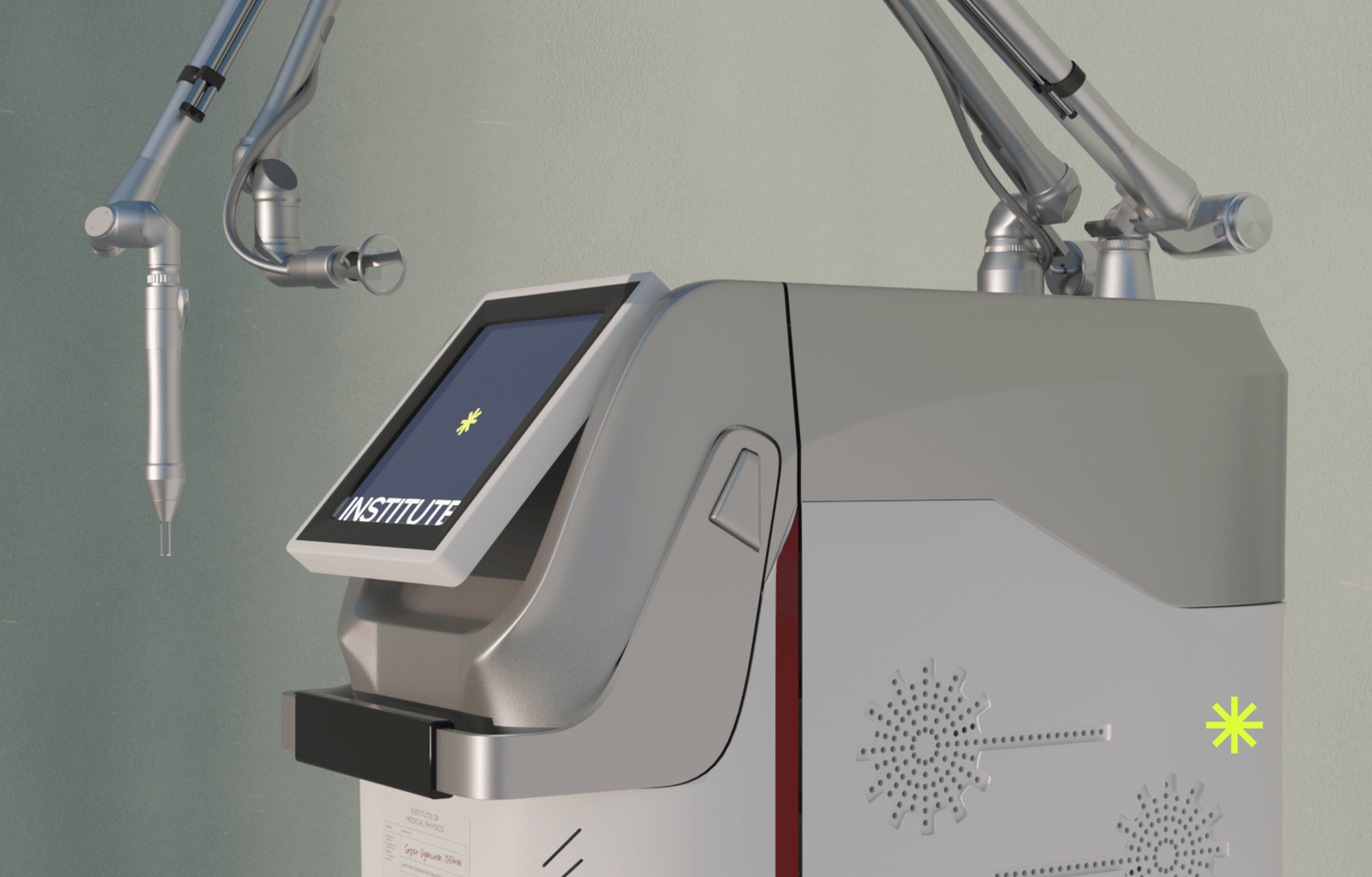
Phantom™, developed in our San Marino research laboratory, comprises eight laser platforms covering nine therapeutic wavelengths, with the fastest pulse of 280 picoseconds and peak power of 2.79 gigawatts. Within Phantom™-Pico, four separate picosecond architectures are used across a single course of treatment, and they are not interchangeable.
Early in a course, pigment is dense, large and optically packed. A sub-300 picosecond pulse generates the highest peak photoacoustic pressure and does the most useful fracturing work. By session five or six, what remains is different material: smaller fragments, more widely dispersed, often partially encapsulated in fibrous tissue, with altered absorption behaviour. Against that residue, a longer 750 picosecond pulse consistently outperforms the faster architecture, because acoustic coupling into a changed target follows different rules.
A clinic operating a single system cannot make that adjustment. It applies one pulse duration to a target whose properties have changed underneath it, which is why so many patients plateau at eight or ten sessions elsewhere before reaching our London tattoo removal clinic with pigment remaining. The same logic explains why layered and cover-up tattoos behave so differently from single-pass work.
What Happens to the Ink After the Shockwave Hits
The laser removes nothing. It only prepares the ink for removal, a distinction routinely glossed over.
Fragmentation is step one. Clearance is immunological: macrophages engulf the fragments, and the lymphatic system carries them away over the following weeks. The immediate white frosting you see during treatment is not bleaching. It is gas and cavitation within the tissue, a direct visual signature of the acoustic event, and it settles within minutes.
This is also why the interval between sessions is a clinical decision, not an administrative one. Most clinics wait 6 to 8 weeks because they have no mechanism to support clearance between visits. The Institute supplements every session with a biological therapy protocol that stimulates local macrophage activity, which is what makes our 4-week treatment interval defensible under medical scrutiny rather than merely faster.
Why the Mechanism Matters Most on Melanin-Rich Skin
Melanin absorbs strongly across the visible and near-infrared spectrum, so epidermal pigment competes with tattoo ink for laser energy. Under a photothermal system, absorbed energy is deposited as heat exactly where you least want it, producing post-inflammatory hyperpigmentation, hypopigmentation or frank burns.
A photomechanical mechanism narrows that risk considerably, but it does not eliminate it, and any doctor-led tattoo removal clinic in London should be able to tell you what happens if something goes wrong. Our protocol runs at 1064 nm as the primary wavelength at conservative fluences for Fitzpatrick IV to VI and holds two in-house rescue pathways: a 1927 nm Thulium protocol for post-inflammatory hyperpigmentation and a 308 nm excimer laser combined with a topical calcineurin inhibitor to stimulate repigmentation where hypopigmentation develops.
Scarred skin needs a different approach again, because fibrous tissue mechanically traps ink and blunts acoustic transmission. Our stacking protocol uses fractional CO₂ to open microscopic channels through the fibrosis, then delivers picosecond energy through them within a five-minute window before the inflammatory cascade closes those channels.
Every consultation begins with subdermal acoustic imaging, an ultrasound scan of the tattoo itself. It shows ink depth, density variation and buried scar tissue that no visual assessment can detect, so the protocol is built around what is actually under the skin.
What to Expect During the Procedure and What You Can Control
Sessions run 15 to 30 minutes depending on size. The sensation is brief and comparable to an elastic band snapping against the skin, sharper over bone and milder over fleshier areas. Cooled-air analgesia is standard, topical anaesthetic is available, and local injections can be administered by a physician.
Four things genuinely influence your outcome:
- Photograph the tattoo monthly in the same light and position: Clearance is gradual, and memory is unreliable. Objective images are the only way to catch a plateau early enough to change the protocol.
- Protect the area from ultraviolet exposure between sessions: Tanned skin raises epidermal melanin, which forces a fluence reduction and slows the whole course.
- Support lymphatic clearance: Hydration, movement and not smoking all measurably affect macrophage transport, which is the rate-limiting step between sessions rather than the laser itself.
- Disclose photosensitising medication: Isotretinoin, certain antibiotics and some herbal preparations alter your skin's response and need to be factored into settings.
Patients under treatment have direct WhatsApp access to the clinical team between visits, so an unexpected blister gets a same-day medical answer rather than a reception callback.
Speak to the Team
If you are weighing up laser tattoo removal near King's Cross and want to know what your tattoo looks like beneath the surface before committing to a course, that is what the first appointment is for. Consultations at our Kings Cross Road clinic include subdermal acoustic imaging and a written protocol. You can book a free consultation or browse the full tattoo removal research library first.
This guide is for general information and is not a substitute for a medical consultation. Suitability, session numbers, and outcomes vary by individual. Book a consultation with the team at the Institute of Medical Physics for an assessment of your tattoo and skin type.
This guide is for general information and is not a substitute for a medical consultation. Suitability, session numbers, and outcomes vary by individual. Book a consultation with the team at the Institute of Medical Physics for an assessment of your tattoo and skin type.
Related articles:
Frequently Asked Questions
How does laser tattoo removal actually work?
Laser tattoo removal works by firing a light pulse shorter than the time an ink particle needs to release its absorbed energy. The trapped energy builds internal mechanical stress until the particle fractures, and immune cells then clear the fragments over the following weeks. The laser fragments the ink; your body removes it.
Does laser tattoo removal use heat?
Heat initiates the process but does not perform the removal. The pigment granule heats extremely rapidly, and because the pulse ends before that heat can conduct outwards, the energy converts into an acoustic pressure wave that shatters the particle. With picosecond pulses the surrounding dermis absorbs very little thermal energy, which is why the risk of burns and scarring is substantially lower than with nanosecond systems.
What is the difference between picosecond and nanosecond laser tattoo removal?
A nanosecond Q-switched pulse lasts roughly 5,000 to 10,000 picoseconds, long enough for ink particles to expand and release stress during the pulse so that much of the energy escapes as heat. A picosecond pulse of 280 to 750 picoseconds keeps that energy confined, fragmenting pigment mechanically. In practice this means smaller fragments, faster immune clearance and fewer sessions.
Is laser tattoo removal a surgical procedure?
No. Laser tattoo removal is non-invasive: nothing is cut, excised or stitched, and the skin barrier is not deliberately broken. It is a medical procedure rather than a surgical one, which is why it should still be delivered under physician supervision, particularly on darker skin or previously treated tattoos.
How many sessions does the tattoo removal procedure take?
Most black-ink tattoos are treated with Phantom™ clear in 4 to 8 sessions spaced 4 weeks apart. Coloured, layered and cover-up work typically needs more, and previously treated tattoos vary widely depending on what the earlier course did to the tissue. Our paper on how many sessions tattoo removal takes breaks this down by ink type.
Is shockwave-based tattoo removal safe on dark skin?
Yes, when the wavelength and fluence are matched to the skin type by a clinician. A 1064 nm wavelength is absorbed relatively poorly by melanin and penetrates deeply, which makes it the appropriate primary choice for Fitzpatrick IV to VI. The risk lies not in the technology but in operators who cannot assess skin type accurately or treat a pigmentary complication if one develops.

How the Phantom™ Laser Removes Tattoos: Shockwaves, Not Heat
.svg)

Quick answer: Laser tattoo removal works by delivering a pulse of light so short that an ink particle absorbs energy faster than it can shed it. The trapped energy becomes mechanical stress, and the particle fractures from the inside out. The surrounding dermis never carries a meaningful thermal load. Phantom™ delivers that pulse in as little as 280 picoseconds, which is why most tattoos treated at our King's Cross clinic clear in 4 to 8 sessions rather than the 10 to 20 quoted elsewhere.
Most explanations of the tattoo removal procedure stop at "the laser breaks up the ink". That statement is true and almost entirely useless. It does not explain why one clinic clears a design in six sessions while another stalls at twelve, why melanin-rich skin blisters under one system and not another, or why every specification sheet in the industry leads with pulse duration. This paper covers what happens inside a pigment granule during the trillionth of a second the laser is firing and why that single variable governs your result. Our complete guide to safe and effective tattoo removal in London covers cost, timelines and clinic selection.

Key Takeaways
- Laser tattoo removal is a mechanical event, not a burn. A pulse shorter than the ink particle's thermal relaxation time traps energy inside the granule until internal stress fractures it, leaving the surrounding dermis with almost no thermal load.
- "Shockwaves, not heat" describes where the energy goes, not its absence. Heat still initiates the process, but with a picosecond pulse it is spent shattering pigment rather than cooking collagen, capillaries and melanocytes.
- Pulse duration governs your session count. A pressure wave crosses a 100 nm particle in roughly 65 picoseconds, so a 5 nanosecond Q-switched pulse is around 75 times too long and vents most of its energy as heat, while Phantom's 280 picosecond pulse stays close to the confinement threshold.
- The optimal pulse duration changes as the tattoo clears. Dense early pigment responds best to sub-300 picosecond pulses, while smaller encapsulated residue at session five or six responds better to 750 picoseconds, which is why single-system clinics plateau at eight to ten sessions.
- The laser fragments the ink; your immune system removes it. Macrophages and the lymphatic system do the actual clearing over the following weeks, which is why biological support between sessions makes a 4-week interval defensible rather than merely faster.
- Melanin-rich and scarred skin need mechanism-matched protocols. A 1064 nm primary wavelength at conservative fluences narrows the risk for Fitzpatrick IV to VI, and fibrous tissue needs fractional CO₂ channels opened before picosecond energy can reach trapped ink.
How Does Laser Tattoo Removal Work at the Particle Level?
Tattoo ink is not a stain. It is a suspension of solid pigment granules held inside dermal fibroblasts and macrophages, roughly 1 to 3 mm beneath the surface. Your immune system has been trying to clear them since the day you were tattooed and has failed because the particles are too large to enter the lymphatic system.
Removal is therefore a size problem before it is a colour problem. Published measurements place most tattoo pigment granules between 10 and 100 nm across, with a thermal relaxation time (the interval a heated particle needs to shed roughly half its energy into surrounding tissue) of 0.1 to 10 nanoseconds. Fragment those granules, and the immune system can finally finish a job it started years ago.
The governing principle is selective photothermolysis: choose a wavelength the target absorbs strongly, deliver it in a pulse shorter than the target's thermal relaxation time, and you destroy the target while sparing its neighbours. The StatPearls clinical reference on laser tattoo removal sets out how this drives wavelength and device selection across skin types.
What happens next is where the industry's language becomes sloppy. Modelling work at Lawrence Livermore National Laboratory concluded that the breakup of tattoo particles is photoacoustic, that shorter pulses fragment pigment more efficiently for the same delivered energy, and that the optimal pulse length sits between 10 and 100 picoseconds. Not thermal. Acoustic.
Shockwaves, Not Heat: What That Claim Actually Means
Precision matters here, because the phrase is often repeated without being understood. Heat is involved. You cannot generate an acoustic wave inside a solid particle without a very rapid temperature rise. The meaningful question is not whether heat exists but where it goes and how long it lingers.
Two physical conditions decide that, and they are not the same thing.
- Thermal confinement occurs when the pulse is shorter than the particle's thermal relaxation time. Heat stays inside the granule instead of conducting outwards into collagen, capillaries and melanocytes.
- Stress confinement is stricter. It occurs when the pulse is shorter than the time a pressure wave needs to travel across the particle. Under that condition the granule cannot expand quickly enough to relieve its own internal pressure, so thermoelastic stress accumulates until the particle fractures.
The numbers are worth doing. Sound travels through soft tissue at roughly 1,540 metres per second, so a pressure wave crosses a 100 nm particle in approximately 65 picoseconds. A conventional 5 nanosecond Q-switched pulse is around 75 times longer than that window, which means the particle expands, vents its stress, and surrenders most of the remaining energy as heat into the dermis.
A sub-300 picosecond pulse lands close enough to the confinement threshold that the same energy is spent fracturing pigment instead. A 2025 review in Applied Sciences describes this photomechanical effect as the principal route by which picosecond irradiation fragments subdermal ink, with fracture occurring once internal stress passes a critical threshold.
So "shockwaves, not heat" is a statement about destination, not about the absence of thermodynamics. The energy still begins as heat inside the granule. What changes is that it is spent shattering pigment rather than cooking the tissue around it, and that difference is what separates a clean result from blistering, textural change and pigmentary injury.
Pulse Duration Decides Everything: A Direct Comparison
The table below sets three device classes against the physics above, with the confinement window calculated for a 100 nm particle at 1,540 m/s.
The pattern is consistent: as pulse duration falls, more energy becomes useful mechanical work and less is wasted as collateral heating. That is the entire argument for Pico laser tattoo removal in London over legacy nanosecond equipment, and it is why session counts differ so sharply between clinics running different hardware.
Why Phantom™ Uses Four Picosecond Architectures Instead of One
Here is the insight most tattoo removal specialists in London miss: the optimal pulse duration changes as the tattoo clears.
Phantom™, developed in our San Marino research laboratory, comprises eight laser platforms covering nine therapeutic wavelengths, with the fastest pulse of 280 picoseconds and peak power of 2.79 gigawatts. Within Phantom™-Pico, four separate picosecond architectures are used across a single course of treatment, and they are not interchangeable.
Early in a course, pigment is dense, large and optically packed. A sub-300 picosecond pulse generates the highest peak photoacoustic pressure and does the most useful fracturing work. By session five or six, what remains is different material: smaller fragments, more widely dispersed, often partially encapsulated in fibrous tissue, with altered absorption behaviour. Against that residue, a longer 750 picosecond pulse consistently outperforms the faster architecture, because acoustic coupling into a changed target follows different rules.
A clinic operating a single system cannot make that adjustment. It applies one pulse duration to a target whose properties have changed underneath it, which is why so many patients plateau at eight or ten sessions elsewhere before reaching our London tattoo removal clinic with pigment remaining. The same logic explains why layered and cover-up tattoos behave so differently from single-pass work.
What Happens to the Ink After the Shockwave Hits
The laser removes nothing. It only prepares the ink for removal, a distinction routinely glossed over.
Fragmentation is step one. Clearance is immunological: macrophages engulf the fragments, and the lymphatic system carries them away over the following weeks. The immediate white frosting you see during treatment is not bleaching. It is gas and cavitation within the tissue, a direct visual signature of the acoustic event, and it settles within minutes.
This is also why the interval between sessions is a clinical decision, not an administrative one. Most clinics wait 6 to 8 weeks because they have no mechanism to support clearance between visits. The Institute supplements every session with a biological therapy protocol that stimulates local macrophage activity, which is what makes our 4-week treatment interval defensible under medical scrutiny rather than merely faster.
Why the Mechanism Matters Most on Melanin-Rich Skin
Melanin absorbs strongly across the visible and near-infrared spectrum, so epidermal pigment competes with tattoo ink for laser energy. Under a photothermal system, absorbed energy is deposited as heat exactly where you least want it, producing post-inflammatory hyperpigmentation, hypopigmentation or frank burns.
A photomechanical mechanism narrows that risk considerably, but it does not eliminate it, and any doctor-led tattoo removal clinic in London should be able to tell you what happens if something goes wrong. Our protocol runs at 1064 nm as the primary wavelength at conservative fluences for Fitzpatrick IV to VI and holds two in-house rescue pathways: a 1927 nm Thulium protocol for post-inflammatory hyperpigmentation and a 308 nm excimer laser combined with a topical calcineurin inhibitor to stimulate repigmentation where hypopigmentation develops.
Scarred skin needs a different approach again, because fibrous tissue mechanically traps ink and blunts acoustic transmission. Our stacking protocol uses fractional CO₂ to open microscopic channels through the fibrosis, then delivers picosecond energy through them within a five-minute window before the inflammatory cascade closes those channels.
Every consultation begins with subdermal acoustic imaging, an ultrasound scan of the tattoo itself. It shows ink depth, density variation and buried scar tissue that no visual assessment can detect, so the protocol is built around what is actually under the skin.
What to Expect During the Procedure and What You Can Control
Sessions run 15 to 30 minutes depending on size. The sensation is brief and comparable to an elastic band snapping against the skin, sharper over bone and milder over fleshier areas. Cooled-air analgesia is standard, topical anaesthetic is available, and local injections can be administered by a physician.
Four things genuinely influence your outcome:
- Photograph the tattoo monthly in the same light and position: Clearance is gradual, and memory is unreliable. Objective images are the only way to catch a plateau early enough to change the protocol.
- Protect the area from ultraviolet exposure between sessions: Tanned skin raises epidermal melanin, which forces a fluence reduction and slows the whole course.
- Support lymphatic clearance: Hydration, movement and not smoking all measurably affect macrophage transport, which is the rate-limiting step between sessions rather than the laser itself.
- Disclose photosensitising medication: Isotretinoin, certain antibiotics and some herbal preparations alter your skin's response and need to be factored into settings.
Patients under treatment have direct WhatsApp access to the clinical team between visits, so an unexpected blister gets a same-day medical answer rather than a reception callback.
Speak to the Team
If you are weighing up laser tattoo removal near King's Cross and want to know what your tattoo looks like beneath the surface before committing to a course, that is what the first appointment is for. Consultations at our Kings Cross Road clinic include subdermal acoustic imaging and a written protocol. You can book a free consultation or browse the full tattoo removal research library first.
This guide is for general information and is not a substitute for a medical consultation. Suitability, session numbers, and outcomes vary by individual. Book a consultation with the team at the Institute of Medical Physics for an assessment of your tattoo and skin type.
This guide is for general information and is not a substitute for a medical consultation. Suitability, session numbers, and outcomes vary by individual. Book a consultation with the team at the Institute of Medical Physics for an assessment of your tattoo and skin type.
Related articles:
Frequently Asked Questions
How does laser tattoo removal actually work?
Laser tattoo removal works by firing a light pulse shorter than the time an ink particle needs to release its absorbed energy. The trapped energy builds internal mechanical stress until the particle fractures, and immune cells then clear the fragments over the following weeks. The laser fragments the ink; your body removes it.
Does laser tattoo removal use heat?
Heat initiates the process but does not perform the removal. The pigment granule heats extremely rapidly, and because the pulse ends before that heat can conduct outwards, the energy converts into an acoustic pressure wave that shatters the particle. With picosecond pulses the surrounding dermis absorbs very little thermal energy, which is why the risk of burns and scarring is substantially lower than with nanosecond systems.
What is the difference between picosecond and nanosecond laser tattoo removal?
A nanosecond Q-switched pulse lasts roughly 5,000 to 10,000 picoseconds, long enough for ink particles to expand and release stress during the pulse so that much of the energy escapes as heat. A picosecond pulse of 280 to 750 picoseconds keeps that energy confined, fragmenting pigment mechanically. In practice this means smaller fragments, faster immune clearance and fewer sessions.
Is laser tattoo removal a surgical procedure?
No. Laser tattoo removal is non-invasive: nothing is cut, excised or stitched, and the skin barrier is not deliberately broken. It is a medical procedure rather than a surgical one, which is why it should still be delivered under physician supervision, particularly on darker skin or previously treated tattoos.
How many sessions does the tattoo removal procedure take?
Most black-ink tattoos are treated with Phantom™ clear in 4 to 8 sessions spaced 4 weeks apart. Coloured, layered and cover-up work typically needs more, and previously treated tattoos vary widely depending on what the earlier course did to the tissue. Our paper on how many sessions tattoo removal takes breaks this down by ink type.
Is shockwave-based tattoo removal safe on dark skin?
Yes, when the wavelength and fluence are matched to the skin type by a clinician. A 1064 nm wavelength is absorbed relatively poorly by melanin and penetrates deeply, which makes it the appropriate primary choice for Fitzpatrick IV to VI. The risk lies not in the technology but in operators who cannot assess skin type accurately or treat a pigmentary complication if one develops.
By -
Dr. Saif Chatoo, MBBCh, B.Sc
July 29, 2026


