



Tattoo Removal Healing: What Your Skin Does Between Sessions

Tattoo Removal Healing: What Your Skin Does Between Sessions
Content of this Paper
↑
Key Takeaways
- Tattoo ink continues clearing for weeks after laser treatment, with fragments still moving through the skin up to 12 weeks after a session.
- Macrophages carry ink fragments toward the lymph nodes, while keratinocytes shed fragments near the skin surface and fibroblasts help repair the tissue.
- Ankles, feet, hands, and wrists can clear more slowly because circulation and lymphatic flow are weaker in these areas.
- Dense tattoos, sun exposure, smoking, and poor sleep can slow the clearance process or extend the time before the next session.
- Rebooking too early can add inflammation before the previous treatment has finished working, which may increase treatment time and cost.
- Skin should be assessed before another session. Persistent tenderness, shine, swelling, or pigment changes may mean the interval needs to be extended.
- A doctor should review signs such as spreading redness, heat, pus, fever, large blisters, or new white patches rather than treating them as normal healing.
Between tattoo removal sessions, your skin clears the ink the laser has already shattered: immune cells carry fragments to your lymph nodes while new skin cells push the rest up and out through the surface. Imaging published in Skin Research and Technology in October 2025 tracked this clearance still running 12 weeks after a single picosecond session.
That lag between the flash and the fade is where most of the removal happens, and it is where a course either finishes in six sessions or drags on to fifteen. The sections below set out what runs beneath the surface, how it shapes your total laser tattoo removal cost, and which signs tell you to wait.
Book a free consultation with the Institute of Medical Physics on 0208 135 6968 or at hello@medicalphysics.institute.
The Laser Starts the Job. Your Immune System Finishes It.
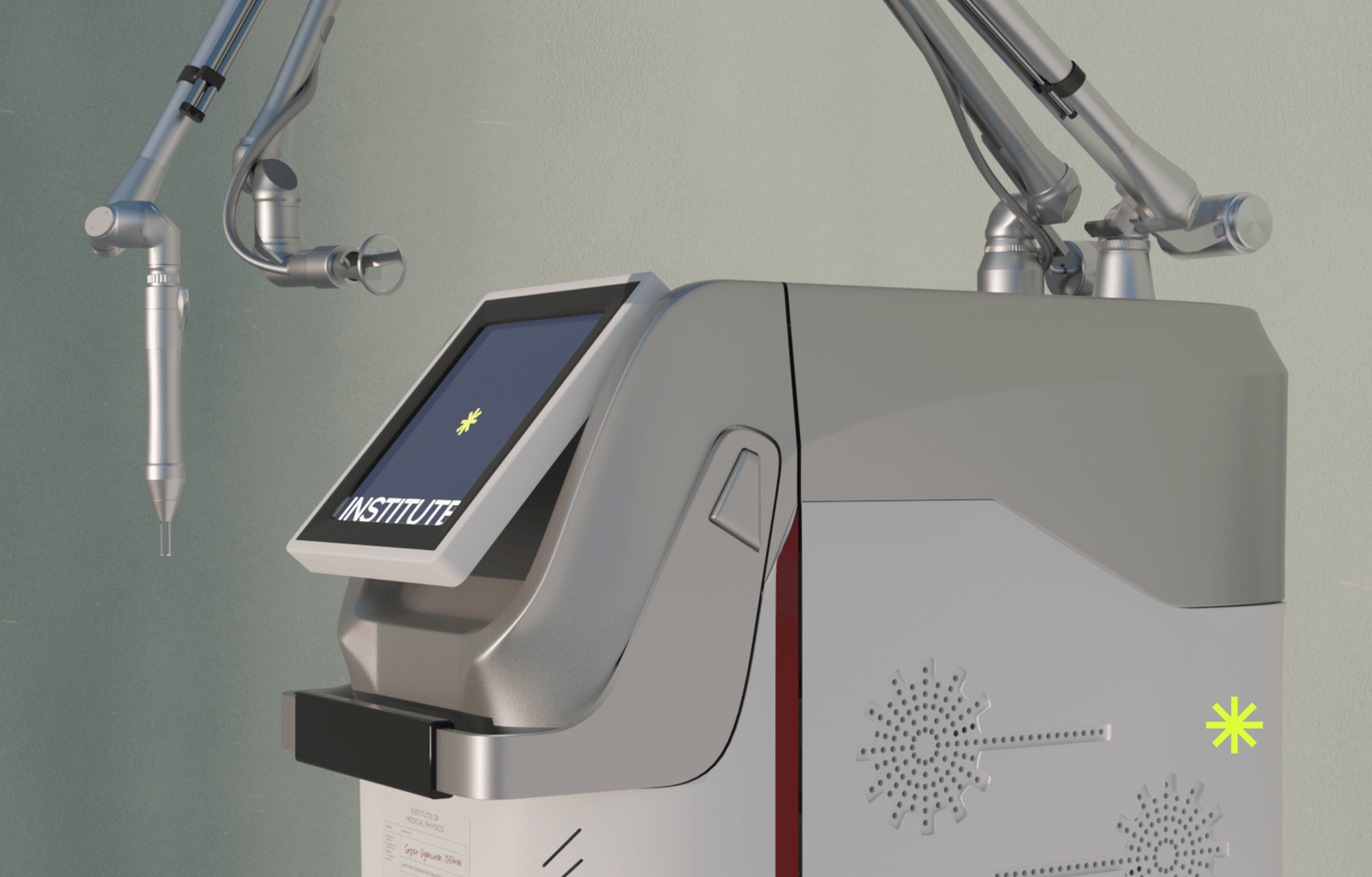
A picosecond pulse lasts trillionths of a second. In that instant it fractures ink particles into fragments small enough for your body to move. Nothing has left your skin at that point. The white frosting you see straight after treatment is gas released by the pulse, not ink disappearing.
Three cell types then take over.
- Macrophages, the immune cells that held the ink in place for years, engulf the smaller fragments and carry them along lymphatic vessels to nearby lymph nodes.
- Keratinocytes, the cells that renew your epidermis roughly every four weeks, lift fragments that sit high in the skin and shed them at the surface.
- Fibroblasts rebuild the collagen the pulse disturbed, which is what returns texture to normal.
The Hamburg team behind the 2025 imaging study saw fragments sitting inside and between epidermal cells at six weeks and still moving at twelve. The fading you see at week two is a fraction of what the same session will deliver by week ten.
Ankles, Sun and Dense Ink: The Three Things That Slow Clearance
Location matters most. A case series published in Lasers in Medical Science in July 2026 notes that wrists, hands, ankles and feet are traditionally slower to clear because blood and lymph flow there is weaker, so fragments wait longer for transport. Ink on the chest and upper back sits on richer circulation and clears faster.
Ink density matters next. A solid black block leaves far more fragments for the same immune capacity than fine linework, so the clearance queue is longer, and each interval must run its full course.
Sun on a healing site adds a melanin response on top of the inflammation. That raises the risk of post-inflammatory hyperpigmentation and forces a longer wait before your doctor can safely fire you for the next session.
Smoking and poor sleep both blunt immune activity. Neither stops clearance, but both stretch it.
What does not help: scrubbing, picking blisters, or the ink-drawing creams sold online. None of them reach the dermis, and all of them risk a wound that must heal before any laser can touch the area again.
Every Early Session Adds to Your Laser Tattoo Removal Cost Twice Over
Clinics that charge per session earn more when a course runs long, so a visit booked before the previous one has finished working is a visit you pay for twice: once in money and once in skin. The tattoo removal price quoted at the door tells you the cost of one flash, not the cost of clearance.
The same case series that tracked slow-clearing ankle tattoos also found that the Kirby-Desai scale predicted a mean of 11.4 sessions, where 3.2 were needed under a multimodal picosecond protocol. The gap between those two numbers is the gap between a clinic that fires on a calendar and a clinic that fires when the skin is ready.
Pay-once pricing removes the incentive to fill your diary. We price our laser tattoo removal packages by the size of the tattoo rather than by the visit, with every session included until clearance. When the price is fixed, your skin sets the interval, not the till.
The table below shows how each between-session factor changes the biology, the session count, and the total tattoo lasering cost under the two pricing models.
Green, Amber, Red: Read Your Skin Before You Rebook
- Green, keep going: Pinkness that fades a little each day, light peeling in the first week, a mild itch, and a tattoo that looks blurrier or greyer than it did. All four mean the three cell types above are doing their work.
- Amber, extend the interval: A site that is still shiny or tender at week three, any darkening of the skin around the tattoo, or a lower-leg tattoo that is still puffy. Each of these means clearance has not finished, and a pulse now would land on inflamed tissue.
- Red, contact your doctor the same day: redness that spreads outward, heat, pus, fever, blisters larger than a fingernail, or new white patches. These are not part of normal healing and need a clinical decision, not a wait-and-see.
We do not book by the calendar alone. Our doctors look at the site before every session and only treat when the previous session has finished its work.
What Does Your Skin Do Between Tattoo Removal Sessions, and Why Does It Decide the Price?
Between sessions your skin does the actual removing: Macrophages carry fragments to your lymph nodes, new epidermal cells shed what sits near the surface, and fibroblasts repair the texture over a window that can run to twelve weeks. Every session fired before that window closes adds inflammation without adding fading, and at per-session pricing it adds an invoice too.
The way to keep the course short is to let each interval finish and to have a doctor confirm it has. Book a free consultation with the Institute of Medical Physics: call 0208 135 6968, WhatsApp 07874 496 371, or email hello@medicalphysics.institute, and we will map your tattoo before we quote it.
Doctor-Reviewed Intervals at the Institute of Medical Physics
A doctor delivers every treatment at the Institute of Medical Physics, and every patient has direct access to those doctors between sessions. If something changes on day nine, you message a physician, not a front desk.
Before we fire a single pulse, we scan beneath the skin. Sub-dermal imaging shows ink depth, density and scarring, and at follow-up it shows whether the last session's fragments have moved. That is the information that tells us to treat or to wait.
Between visits, our biological therapy protocol supports the macrophage activity that carries fragments away, which is how we hold a 3- to 4-week standard interval under medical supervision rather than the 6- to 8-weeks many clinics use. Where a site is still clearing, we extend it. If pigment change appears, our 1927 nm Thulium laser protocol treats it in-house.
Our Medical Director, Dr Saif Chatoo, is a GMC-registered NHS physician (GMC 8010191), and you can check that number on the GMC register yourself. England has not yet switched on its licensing scheme for non-surgical cosmetic procedures: the House of Commons Library briefing updated in July 2026 confirms the government set out its implementation plans in August 2025, with local authorities due to administer licences. Until that scheme is live, a GMC number is the check you can run today.
Read our complete guide to safe, effective tattoo removal to see how we plan the full course, or visit us at our Kings Cross clinic, three minutes' walk from Kings Cross St Pancras.
This guide is for general information and is not a substitute for a medical consultation. Suitability, session numbers, and outcomes vary by individual. Book a consultation with the team at the Institute of Medical Physics for an assessment of your tattoo and skin type.
This guide is for general information and is not a substitute for a medical consultation. Suitability, session numbers, and outcomes vary by individual. Book a consultation with the team at the Institute of Medical Physics for an assessment of your tattoo and skin type.
Related articles:
Frequently Asked Questions
How Long Does Skin Take to Heal Between Tattoo Removal Sessions?
Surface healing finishes in one to two weeks: redness settles, peeling stops and the site feels normal to touch. Ink clearance beneath the surface keeps running far longer, with fragments still moving through the epidermis at 12 weeks in the 2025 Hamburg imaging study. Your doctor sets the next session by the second timeline, not the first.
Does the Cost of Tattoo Removal Go Up If My Skin Heals Slowly?
At a per-session clinic, yes. Slow clearance means more visits, and each visit lands on your invoice. Under a pay-once package priced by tattoo size, the cost of tattoo removal stays fixed, however many sessions your skin needs, so a slow-clearing ankle tattoo costs the same as a fast-clearing shoulder tattoo of the same size.
Can I Speed Up Ink Clearance between Sessions?
You can protect it rather than speed it. Keep the site out of the sun, sleep properly, stay hydrated and do not smoke, because all four support the immune cells doing the transport. Gentle movement helps lymph flow. Creams that claim to pull ink out do nothing at dermal depth and can damage healing skin.
Why Does My Tattoo Look Unchanged Two Weeks After a Session?
Because the fragments have not left yet. Two weeks in, macrophages are still loading fragments, and keratinocytes have not completed a full renewal cycle, so the ink is broken but still in place. Most visible fading from a session arrives between weeks four and ten. Judge progress at your next review, not in the mirror at day fourteen.
What Should I Avoid Between Laser Tattoo Removal Sessions?
Avoid sun and sunbeds on the site, hot baths and swimming until the skin has closed, picking any blister or scab, and heavy friction from tight clothing or straps. Avoid booking your next session by date alone. If the site is still shiny, tender or darker than the surrounding skin, tell your doctor and expect the interval to move.

Tattoo Removal Healing: What Your Skin Does Between Sessions
.svg)

Key Takeaways
- Tattoo ink continues clearing for weeks after laser treatment, with fragments still moving through the skin up to 12 weeks after a session.
- Macrophages carry ink fragments toward the lymph nodes, while keratinocytes shed fragments near the skin surface and fibroblasts help repair the tissue.
- Ankles, feet, hands, and wrists can clear more slowly because circulation and lymphatic flow are weaker in these areas.
- Dense tattoos, sun exposure, smoking, and poor sleep can slow the clearance process or extend the time before the next session.
- Rebooking too early can add inflammation before the previous treatment has finished working, which may increase treatment time and cost.
- Skin should be assessed before another session. Persistent tenderness, shine, swelling, or pigment changes may mean the interval needs to be extended.
- A doctor should review signs such as spreading redness, heat, pus, fever, large blisters, or new white patches rather than treating them as normal healing.
Between tattoo removal sessions, your skin clears the ink the laser has already shattered: immune cells carry fragments to your lymph nodes while new skin cells push the rest up and out through the surface. Imaging published in Skin Research and Technology in October 2025 tracked this clearance still running 12 weeks after a single picosecond session.
That lag between the flash and the fade is where most of the removal happens, and it is where a course either finishes in six sessions or drags on to fifteen. The sections below set out what runs beneath the surface, how it shapes your total laser tattoo removal cost, and which signs tell you to wait.
Book a free consultation with the Institute of Medical Physics on 0208 135 6968 or at hello@medicalphysics.institute.

The Laser Starts the Job. Your Immune System Finishes It.
A picosecond pulse lasts trillionths of a second. In that instant it fractures ink particles into fragments small enough for your body to move. Nothing has left your skin at that point. The white frosting you see straight after treatment is gas released by the pulse, not ink disappearing.
Three cell types then take over.
- Macrophages, the immune cells that held the ink in place for years, engulf the smaller fragments and carry them along lymphatic vessels to nearby lymph nodes.
- Keratinocytes, the cells that renew your epidermis roughly every four weeks, lift fragments that sit high in the skin and shed them at the surface.
- Fibroblasts rebuild the collagen the pulse disturbed, which is what returns texture to normal.
The Hamburg team behind the 2025 imaging study saw fragments sitting inside and between epidermal cells at six weeks and still moving at twelve. The fading you see at week two is a fraction of what the same session will deliver by week ten.
Ankles, Sun and Dense Ink: The Three Things That Slow Clearance
Location matters most. A case series published in Lasers in Medical Science in July 2026 notes that wrists, hands, ankles and feet are traditionally slower to clear because blood and lymph flow there is weaker, so fragments wait longer for transport. Ink on the chest and upper back sits on richer circulation and clears faster.
Ink density matters next. A solid black block leaves far more fragments for the same immune capacity than fine linework, so the clearance queue is longer, and each interval must run its full course.
Sun on a healing site adds a melanin response on top of the inflammation. That raises the risk of post-inflammatory hyperpigmentation and forces a longer wait before your doctor can safely fire you for the next session.
Smoking and poor sleep both blunt immune activity. Neither stops clearance, but both stretch it.
What does not help: scrubbing, picking blisters, or the ink-drawing creams sold online. None of them reach the dermis, and all of them risk a wound that must heal before any laser can touch the area again.
Every Early Session Adds to Your Laser Tattoo Removal Cost Twice Over
Clinics that charge per session earn more when a course runs long, so a visit booked before the previous one has finished working is a visit you pay for twice: once in money and once in skin. The tattoo removal price quoted at the door tells you the cost of one flash, not the cost of clearance.
The same case series that tracked slow-clearing ankle tattoos also found that the Kirby-Desai scale predicted a mean of 11.4 sessions, where 3.2 were needed under a multimodal picosecond protocol. The gap between those two numbers is the gap between a clinic that fires on a calendar and a clinic that fires when the skin is ready.
Pay-once pricing removes the incentive to fill your diary. We price our laser tattoo removal packages by the size of the tattoo rather than by the visit, with every session included until clearance. When the price is fixed, your skin sets the interval, not the till.
The table below shows how each between-session factor changes the biology, the session count, and the total tattoo lasering cost under the two pricing models.
Green, Amber, Red: Read Your Skin Before You Rebook
- Green, keep going: Pinkness that fades a little each day, light peeling in the first week, a mild itch, and a tattoo that looks blurrier or greyer than it did. All four mean the three cell types above are doing their work.
- Amber, extend the interval: A site that is still shiny or tender at week three, any darkening of the skin around the tattoo, or a lower-leg tattoo that is still puffy. Each of these means clearance has not finished, and a pulse now would land on inflamed tissue.
- Red, contact your doctor the same day: redness that spreads outward, heat, pus, fever, blisters larger than a fingernail, or new white patches. These are not part of normal healing and need a clinical decision, not a wait-and-see.
We do not book by the calendar alone. Our doctors look at the site before every session and only treat when the previous session has finished its work.
What Does Your Skin Do Between Tattoo Removal Sessions, and Why Does It Decide the Price?
Between sessions your skin does the actual removing: Macrophages carry fragments to your lymph nodes, new epidermal cells shed what sits near the surface, and fibroblasts repair the texture over a window that can run to twelve weeks. Every session fired before that window closes adds inflammation without adding fading, and at per-session pricing it adds an invoice too.
The way to keep the course short is to let each interval finish and to have a doctor confirm it has. Book a free consultation with the Institute of Medical Physics: call 0208 135 6968, WhatsApp 07874 496 371, or email hello@medicalphysics.institute, and we will map your tattoo before we quote it.
Doctor-Reviewed Intervals at the Institute of Medical Physics
A doctor delivers every treatment at the Institute of Medical Physics, and every patient has direct access to those doctors between sessions. If something changes on day nine, you message a physician, not a front desk.
Before we fire a single pulse, we scan beneath the skin. Sub-dermal imaging shows ink depth, density and scarring, and at follow-up it shows whether the last session's fragments have moved. That is the information that tells us to treat or to wait.
Between visits, our biological therapy protocol supports the macrophage activity that carries fragments away, which is how we hold a 3- to 4-week standard interval under medical supervision rather than the 6- to 8-weeks many clinics use. Where a site is still clearing, we extend it. If pigment change appears, our 1927 nm Thulium laser protocol treats it in-house.
Our Medical Director, Dr Saif Chatoo, is a GMC-registered NHS physician (GMC 8010191), and you can check that number on the GMC register yourself. England has not yet switched on its licensing scheme for non-surgical cosmetic procedures: the House of Commons Library briefing updated in July 2026 confirms the government set out its implementation plans in August 2025, with local authorities due to administer licences. Until that scheme is live, a GMC number is the check you can run today.
Read our complete guide to safe, effective tattoo removal to see how we plan the full course, or visit us at our Kings Cross clinic, three minutes' walk from Kings Cross St Pancras.
This guide is for general information and is not a substitute for a medical consultation. Suitability, session numbers, and outcomes vary by individual. Book a consultation with the team at the Institute of Medical Physics for an assessment of your tattoo and skin type.
This guide is for general information and is not a substitute for a medical consultation. Suitability, session numbers, and outcomes vary by individual. Book a consultation with the team at the Institute of Medical Physics for an assessment of your tattoo and skin type.
Related articles:
Frequently Asked Questions
How Long Does Skin Take to Heal Between Tattoo Removal Sessions?
Surface healing finishes in one to two weeks: redness settles, peeling stops and the site feels normal to touch. Ink clearance beneath the surface keeps running far longer, with fragments still moving through the epidermis at 12 weeks in the 2025 Hamburg imaging study. Your doctor sets the next session by the second timeline, not the first.
Does the Cost of Tattoo Removal Go Up If My Skin Heals Slowly?
At a per-session clinic, yes. Slow clearance means more visits, and each visit lands on your invoice. Under a pay-once package priced by tattoo size, the cost of tattoo removal stays fixed, however many sessions your skin needs, so a slow-clearing ankle tattoo costs the same as a fast-clearing shoulder tattoo of the same size.
Can I Speed Up Ink Clearance between Sessions?
You can protect it rather than speed it. Keep the site out of the sun, sleep properly, stay hydrated and do not smoke, because all four support the immune cells doing the transport. Gentle movement helps lymph flow. Creams that claim to pull ink out do nothing at dermal depth and can damage healing skin.
Why Does My Tattoo Look Unchanged Two Weeks After a Session?
Because the fragments have not left yet. Two weeks in, macrophages are still loading fragments, and keratinocytes have not completed a full renewal cycle, so the ink is broken but still in place. Most visible fading from a session arrives between weeks four and ten. Judge progress at your next review, not in the mirror at day fourteen.
What Should I Avoid Between Laser Tattoo Removal Sessions?
Avoid sun and sunbeds on the site, hot baths and swimming until the skin has closed, picking any blister or scab, and heavy friction from tight clothing or straps. Avoid booking your next session by date alone. If the site is still shiny, tender or darker than the surrounding skin, tell your doctor and expect the interval to move.
By -
Dr. Saif Chatoo, MBBCh, B.Sc
September 15, 2026


