



Does Laser Tattoo Removal Hurt? What to Expect During Treatment
Does Laser Tattoo Removal Hurt? What to Expect During Treatment
Content of this Paper
↑
Pain is the first question almost every patient asks before booking laser tattoo removal in London, and it deserves an honest clinical answer rather than reassuring marketing. Yes, the procedure is uncomfortable. No, it is not the ordeal most people imagine, and the discomfort is brief, controllable, and far milder than it was a decade ago.
What actually decides how much a session hurts is the technology firing into your skin and the clinician controlling it. This guide explains exactly what the sensation feels like, why it varies, and how a doctor-led service keeps it manageable. For the wider clinical picture, our complete guide to safe and effective tattoo removal covers the full treatment course.
- Picosecond lasers cause significantly less pain than older Q-switched systems. A controlled trial confirmed the difference is statistically significant, not marketing.
- Where the tattoo sits on the body matters more than its size. Ribs, ankles, and inner wrists hurt most; the outer arm, thigh, and calf barely register.
- Cold air alone is not pain management. A doctor-led clinic can layer topical anaesthetic, prescription-strength numbing, and injectable local anaesthetic a salon legally cannot.
- The actual laser firing time is minutes, not hours. Most patients say the anticipation is worse than the procedure itself.
- Post-session discomfort follows a predictable pattern: acute stinging stops immediately, and sunburn-like tenderness settles within 24 to 72 hours.
- Simple pre-session habits, no alcohol, no empty stomach, and no sunburnt skin measurably reduce how much a session hurts and how well the skin recovers.
Why modern Pico lasers hurt less than older machines
Pain during removal is largely a function of heat. Older Q-switched lasers deliver energy in nanoseconds, long enough for that heat to spread into surrounding tissue and stimulate the nerve endings that register burning. Picosecond lasers fire roughly a thousand times faster, depositing their energy and exiting before the heat can diffuse. The effect is more photoacoustic and less thermal: ink shatters efficiently while the nerves receive a shorter, sharper, and ultimately more tolerable stimulus.
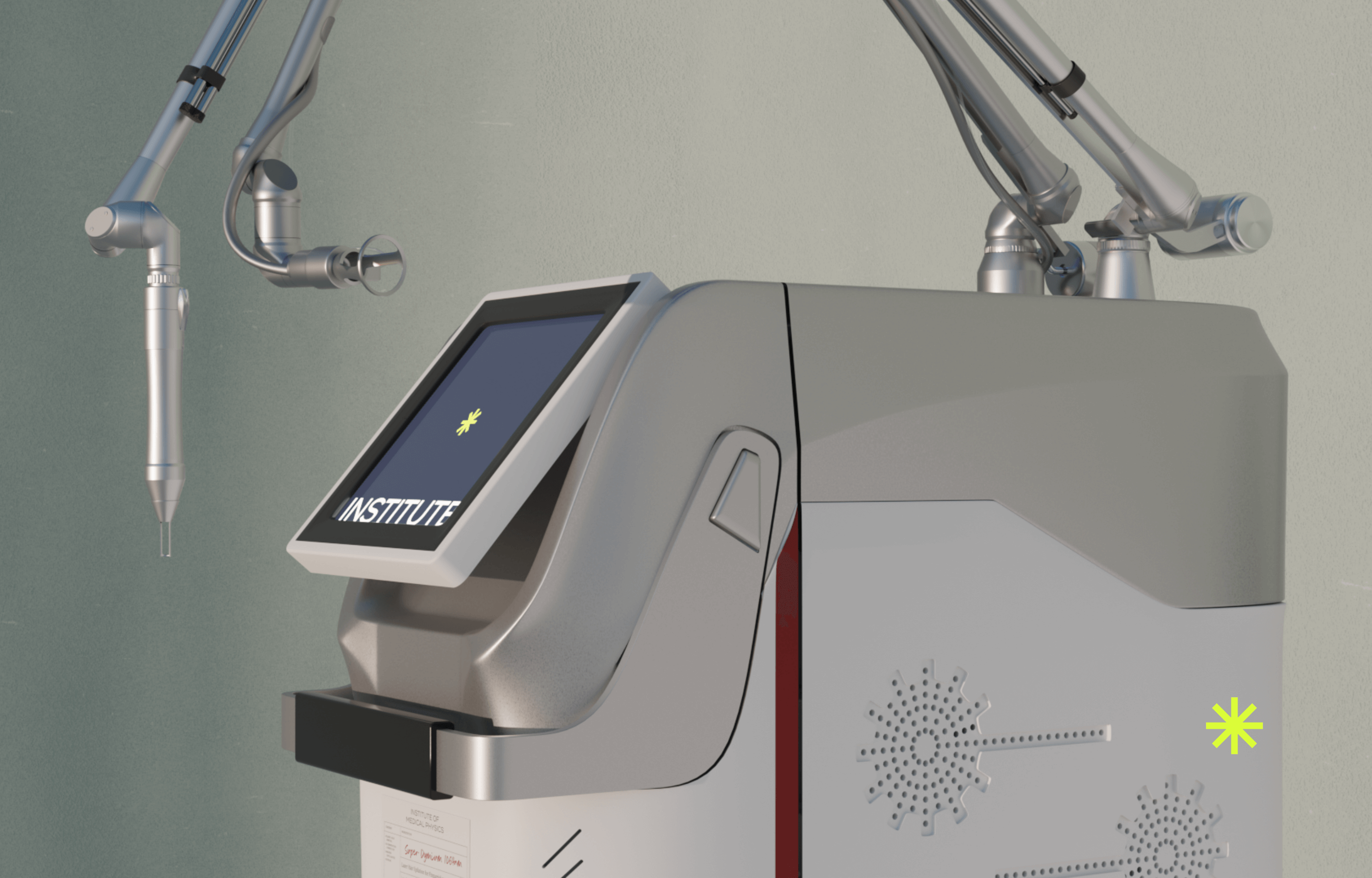
This is not a marketing line. A prospective split-lesion trial published in the Journal of the European Academy of Dermatology and Venereology found that patients felt significantly less pain with picosecond lasers than with nanosecond systems, with the difference reaching high statistical significance (P < 0.001). It is one of the clearest reasons to seek out Pico laser tattoo removal in London rather than defaulting to whichever machine a high street salon happens to own. Our laser tattoo removal programme runs four picosecond architectures, with a fastest pulse of 280 picoseconds, precisely so the physician can match pulse duration to the stage of clearance instead of forcing one fixed setting through every session.
Which areas hurt the most, and which barely register
Location matters more than tattoo size. Skin sitting directly over bone, with little fat to cushion it and a dense supply of nerve endings, is consistently the most sensitive. Fleshier areas with more soft tissue are far more comfortable. The table below reflects the pattern we see across thousands of treatments at our London tattoo removal clinic.
None of these is a reason to avoid removal in a given spot. It simply tells the clinician where to weight the numbing strategy, and it lets you walk in knowing roughly what to expect rather than being surprised mid-session.
How a doctor-led clinic actually controls the pain
This is where the difference between a medical setting and a beauty salon stops being theoretical. Most non-medical clinics offer one form of relief: a stream of cold air. A genuinely doctor-led tattoo removal London service can layer several approaches and, crucially, can prescribe and administer anaesthetic that technicians legally cannot.
At the Institute, cooled-air analgesia runs throughout every session, chilling the skin before, during, and after each pass to blunt the thermal sensation. Beyond that, topical numbing creams are available in graded strengths. Clinical guidance from NCBI StatPearls notes that anaesthetic creams such as lidocaine and prilocaine should sit under an occlusive dressing for 45 to 60 minutes and be fully removed before treatment, which is exactly the protocol a medical clinic can plan around.
For sensitive areas or anxious patients, a doctor can also administer a local anaesthetic injection, an option a published clinical update on laser tattoo removal lists alongside cool air and regional nerve blocks as effective ways to reduce discomfort. Because our sessions are delivered by physicians, that escalation is available in the room rather than something you are simply told to endure.
The practical consequence is that comfort is planned, not improvised. A salon limited to cold air has no way to step up relief if a patient finds a bony area unbearable, so sessions are often rushed or cut short, which compromises clearance as much as comfort. Matching the numbing strategy to the body area and to your individual tolerance means the clinician can treat thoroughly in one sitting rather than leaving pigment behind because the pain became the limiting factor.
What to expect during your session, step by step
Knowing the sequence removes most of the apprehension. A typical visit looks like this:
- Assessment: The tattoo is examined, and we map ink depth and any hidden scar tissue using subdermal acoustic imaging so the settings are tailored to your skin rather than guessed.
- Numbing: If you are using topical anaesthetic, it goes on under occlusion and is timed correctly before being removed.
- Preparation: Protective eyewear is fitted, the area is cleaned, and a brief test pulse confirms the skin's response.
- Treatment: The laser fires in passes, with cold air running continuously. This is the part that stings, and it is also the shortest part.
- Cooling and dressing: The area is cooled, soothed, and covered, with clear aftercare instructions.
Most appointments are over quickly, with the actual laser time measured in minutes. You also leave with direct WhatsApp access to the clinical team, so any question in the hours and days afterwards reaches a clinician rather than a reception inbox.
How the skin feels in the hours and days afterwards
Immediately after firing, the treated skin shows a temporary white frosting, which fades within minutes as the released gases settle. Over the next few hours you can expect a warm, tender, sunburn-like sensation, sometimes with mild throbbing, swelling, and occasional pinpoint redness. This is normal and a sign the immune system has begun clearing the fragmented pigment.
Discomfort typically eases substantially within 24 to 72 hours. Keeping the area cool, clean, and protected from friction and sun makes those first days noticeably easier. Tattoos on the lower legs and ankles, where circulation is slower, can stay tender a little longer. If anything feels out of step with this pattern, such as blistering that worsens, spreading heat, or unusual pain, that is precisely when in-house medical oversight matters, because a complication can be assessed and treated rather than left to chance. The full recovery arc, session by session, is set out in our explainer on how long a tattoo removal course takes.
Practical ways to make treatment day more comfortable
You have more influence over the experience than you might think. A few simple steps consistently reduce how much a session hurts:
- Arriving lightheaded or on an empty stomach makes pain feel sharper.
- Skip alcohol and limit caffeine in the 24 hours before, as both can heighten sensitivity and bruising.
- Arrive with clean, bare skin over the tattoo, free of cosmetics, fake tan, or thick moisturiser.
- Avoid booking when skin is already irritated or sunburnt, which raises both discomfort and risk.
- Ask about numbing in advance so any cream has time to work, rather than deciding on the day.
- Tell the clinician how you are feeling. Settings and pacing can be adjusted, and a short pause is always available.
For patients who have struggled with painful or stalled treatment elsewhere, our tattoo removal specialists London team frequently reviews previous courses through the tattoo removal knowledge hub and adjusts the approach accordingly.
The bottom line
Laser tattoo removal does hurt, but briefly and manageably, and the level of discomfort is not fixed. It is shaped by the laser's pulse duration, the part of the body being treated, and whether a clinician has the tools and authority to control your comfort. Picosecond technology, cooled air, graded topical numbing, and physician-administered anaesthesia together turn a procedure many people dread into one that is genuinely tolerable. Choosing a medical clinic over a salon is the single biggest decision you can make for both comfort and outcome.
Book a consultation
If you would like a clear, honest assessment of what your removal will involve, our physicians offer consultations at the King's Cross clinic. You can book a consultation online to discuss your tattoo, your skin type, and the comfort options available for laser tattoo removal near King's Cross.
About the Institute of Medical Physics
The Institute of Medical Physics, founded by Dr Emanuel Paleco, is a premier medical laboratory specialising in medical and aesthetic laser science. With a flagship clinic in King’s Cross and additional locations in North London and Essex, the institute is at the forefront of laser science innovation.
Experience advanced laser science and innovative medical treatments. Book a consultation with Dr Emanuel Paleco and his expert team at the Institute of Medical Physics.
Related Articles
Frequently Asked Questions
Does laser tattoo removal hurt more than getting the tattoo?
For most people it is broadly comparable and often shorter. Getting tattooed can take hours of continuous needling, whereas laser removal involves only minutes of actual firing per session. The sensation is sharper and more concentrated, like a hot elastic band snap, but it ends quickly once each pass is complete.
How long does the pain last after a session?
The acute sting stops the moment the laser lifts. A warm, tender, sunburn-like feeling can linger for a few hours and usually settles substantially within 24 to 72 hours. Keeping the area cool and protected speeds this up, and tattoos over bone or on the lower legs may stay tender slightly longer.
Can I use numbing cream before laser tattoo removal?
Yes. Topical anaesthetic creams such as lidocaine and prilocaine are commonly used and should be applied under an occlusive dressing for around 45 to 60 minutes, then fully removed before treatment. In a doctor-led clinic, stronger options including a local anaesthetic injection are also available for sensitive areas.
Which is more painful, Pico or Q-switched laser removal?
Picosecond removal is generally less painful. Because Pico lasers fire about a thousand times faster than older Q-switched systems, they deposit energy before heat spreads through the skin. A controlled trial recorded significantly lower pain scores with picosecond lasers than with nanosecond ones.
What is the most painful area to have a tattoo removed?
Skin directly over bone is the most sensitive: ribs, the sternum, ankles, feet, hands, and the inner wrist. Fleshier areas such as the outer arm, thigh, calf, and upper back are far more comfortable because soft tissue cushions the nerve endings.
Is removal more painful for darker skin or larger tattoos?
Larger tattoos mean more total pulses, so a session lasts longer, but it is not inherently sharper. Darker (Fitzpatrick IV to VI) skin is treated with conservative settings and a 1064 nm wavelength to protect the skin, which is handled safely under medical supervision rather than being a reason to expect more pain.

Does Laser Tattoo Removal Hurt? What to Expect During Treatment
.svg)

Pain is the first question almost every patient asks before booking laser tattoo removal in London, and it deserves an honest clinical answer rather than reassuring marketing. Yes, the procedure is uncomfortable. No, it is not the ordeal most people imagine, and the discomfort is brief, controllable, and far milder than it was a decade ago.
What actually decides how much a session hurts is the technology firing into your skin and the clinician controlling it. This guide explains exactly what the sensation feels like, why it varies, and how a doctor-led service keeps it manageable. For the wider clinical picture, our complete guide to safe and effective tattoo removal covers the full treatment course.

- Picosecond lasers cause significantly less pain than older Q-switched systems. A controlled trial confirmed the difference is statistically significant, not marketing.
- Where the tattoo sits on the body matters more than its size. Ribs, ankles, and inner wrists hurt most; the outer arm, thigh, and calf barely register.
- Cold air alone is not pain management. A doctor-led clinic can layer topical anaesthetic, prescription-strength numbing, and injectable local anaesthetic a salon legally cannot.
- The actual laser firing time is minutes, not hours. Most patients say the anticipation is worse than the procedure itself.
- Post-session discomfort follows a predictable pattern: acute stinging stops immediately, and sunburn-like tenderness settles within 24 to 72 hours.
- Simple pre-session habits, no alcohol, no empty stomach, and no sunburnt skin measurably reduce how much a session hurts and how well the skin recovers.
Why modern Pico lasers hurt less than older machines
Pain during removal is largely a function of heat. Older Q-switched lasers deliver energy in nanoseconds, long enough for that heat to spread into surrounding tissue and stimulate the nerve endings that register burning. Picosecond lasers fire roughly a thousand times faster, depositing their energy and exiting before the heat can diffuse. The effect is more photoacoustic and less thermal: ink shatters efficiently while the nerves receive a shorter, sharper, and ultimately more tolerable stimulus.
This is not a marketing line. A prospective split-lesion trial published in the Journal of the European Academy of Dermatology and Venereology found that patients felt significantly less pain with picosecond lasers than with nanosecond systems, with the difference reaching high statistical significance (P < 0.001). It is one of the clearest reasons to seek out Pico laser tattoo removal in London rather than defaulting to whichever machine a high street salon happens to own. Our laser tattoo removal programme runs four picosecond architectures, with a fastest pulse of 280 picoseconds, precisely so the physician can match pulse duration to the stage of clearance instead of forcing one fixed setting through every session.
Which areas hurt the most, and which barely register
Location matters more than tattoo size. Skin sitting directly over bone, with little fat to cushion it and a dense supply of nerve endings, is consistently the most sensitive. Fleshier areas with more soft tissue are far more comfortable. The table below reflects the pattern we see across thousands of treatments at our London tattoo removal clinic.
None of these is a reason to avoid removal in a given spot. It simply tells the clinician where to weight the numbing strategy, and it lets you walk in knowing roughly what to expect rather than being surprised mid-session.
How a doctor-led clinic actually controls the pain
This is where the difference between a medical setting and a beauty salon stops being theoretical. Most non-medical clinics offer one form of relief: a stream of cold air. A genuinely doctor-led tattoo removal London service can layer several approaches and, crucially, can prescribe and administer anaesthetic that technicians legally cannot.
At the Institute, cooled-air analgesia runs throughout every session, chilling the skin before, during, and after each pass to blunt the thermal sensation. Beyond that, topical numbing creams are available in graded strengths. Clinical guidance from NCBI StatPearls notes that anaesthetic creams such as lidocaine and prilocaine should sit under an occlusive dressing for 45 to 60 minutes and be fully removed before treatment, which is exactly the protocol a medical clinic can plan around.
For sensitive areas or anxious patients, a doctor can also administer a local anaesthetic injection, an option a published clinical update on laser tattoo removal lists alongside cool air and regional nerve blocks as effective ways to reduce discomfort. Because our sessions are delivered by physicians, that escalation is available in the room rather than something you are simply told to endure.
The practical consequence is that comfort is planned, not improvised. A salon limited to cold air has no way to step up relief if a patient finds a bony area unbearable, so sessions are often rushed or cut short, which compromises clearance as much as comfort. Matching the numbing strategy to the body area and to your individual tolerance means the clinician can treat thoroughly in one sitting rather than leaving pigment behind because the pain became the limiting factor.
What to expect during your session, step by step
Knowing the sequence removes most of the apprehension. A typical visit looks like this:
- Assessment: The tattoo is examined, and we map ink depth and any hidden scar tissue using subdermal acoustic imaging so the settings are tailored to your skin rather than guessed.
- Numbing: If you are using topical anaesthetic, it goes on under occlusion and is timed correctly before being removed.
- Preparation: Protective eyewear is fitted, the area is cleaned, and a brief test pulse confirms the skin's response.
- Treatment: The laser fires in passes, with cold air running continuously. This is the part that stings, and it is also the shortest part.
- Cooling and dressing: The area is cooled, soothed, and covered, with clear aftercare instructions.
Most appointments are over quickly, with the actual laser time measured in minutes. You also leave with direct WhatsApp access to the clinical team, so any question in the hours and days afterwards reaches a clinician rather than a reception inbox.
How the skin feels in the hours and days afterwards
Immediately after firing, the treated skin shows a temporary white frosting, which fades within minutes as the released gases settle. Over the next few hours you can expect a warm, tender, sunburn-like sensation, sometimes with mild throbbing, swelling, and occasional pinpoint redness. This is normal and a sign the immune system has begun clearing the fragmented pigment.
Discomfort typically eases substantially within 24 to 72 hours. Keeping the area cool, clean, and protected from friction and sun makes those first days noticeably easier. Tattoos on the lower legs and ankles, where circulation is slower, can stay tender a little longer. If anything feels out of step with this pattern, such as blistering that worsens, spreading heat, or unusual pain, that is precisely when in-house medical oversight matters, because a complication can be assessed and treated rather than left to chance. The full recovery arc, session by session, is set out in our explainer on how long a tattoo removal course takes.
Practical ways to make treatment day more comfortable
You have more influence over the experience than you might think. A few simple steps consistently reduce how much a session hurts:
- Arriving lightheaded or on an empty stomach makes pain feel sharper.
- Skip alcohol and limit caffeine in the 24 hours before, as both can heighten sensitivity and bruising.
- Arrive with clean, bare skin over the tattoo, free of cosmetics, fake tan, or thick moisturiser.
- Avoid booking when skin is already irritated or sunburnt, which raises both discomfort and risk.
- Ask about numbing in advance so any cream has time to work, rather than deciding on the day.
- Tell the clinician how you are feeling. Settings and pacing can be adjusted, and a short pause is always available.
For patients who have struggled with painful or stalled treatment elsewhere, our tattoo removal specialists London team frequently reviews previous courses through the tattoo removal knowledge hub and adjusts the approach accordingly.
The bottom line
Laser tattoo removal does hurt, but briefly and manageably, and the level of discomfort is not fixed. It is shaped by the laser's pulse duration, the part of the body being treated, and whether a clinician has the tools and authority to control your comfort. Picosecond technology, cooled air, graded topical numbing, and physician-administered anaesthesia together turn a procedure many people dread into one that is genuinely tolerable. Choosing a medical clinic over a salon is the single biggest decision you can make for both comfort and outcome.
Book a consultation
If you would like a clear, honest assessment of what your removal will involve, our physicians offer consultations at the King's Cross clinic. You can book a consultation online to discuss your tattoo, your skin type, and the comfort options available for laser tattoo removal near King's Cross.
About the Institute of Medical Physics
The Institute of Medical Physics, founded by Dr Emanuel Paleco, is a premier medical laboratory specialising in medical and aesthetic laser science. With a flagship clinic in King’s Cross and additional locations in North London and Essex, the institute is at the forefront of laser science innovation.
Experience advanced laser science and innovative medical treatments. Book a consultation with Dr Emanuel Paleco and his expert team at the Institute of Medical Physics.
Related Articles
Frequently Asked Questions
Does laser tattoo removal hurt more than getting the tattoo?
For most people it is broadly comparable and often shorter. Getting tattooed can take hours of continuous needling, whereas laser removal involves only minutes of actual firing per session. The sensation is sharper and more concentrated, like a hot elastic band snap, but it ends quickly once each pass is complete.
How long does the pain last after a session?
The acute sting stops the moment the laser lifts. A warm, tender, sunburn-like feeling can linger for a few hours and usually settles substantially within 24 to 72 hours. Keeping the area cool and protected speeds this up, and tattoos over bone or on the lower legs may stay tender slightly longer.
Can I use numbing cream before laser tattoo removal?
Yes. Topical anaesthetic creams such as lidocaine and prilocaine are commonly used and should be applied under an occlusive dressing for around 45 to 60 minutes, then fully removed before treatment. In a doctor-led clinic, stronger options including a local anaesthetic injection are also available for sensitive areas.
Which is more painful, Pico or Q-switched laser removal?
Picosecond removal is generally less painful. Because Pico lasers fire about a thousand times faster than older Q-switched systems, they deposit energy before heat spreads through the skin. A controlled trial recorded significantly lower pain scores with picosecond lasers than with nanosecond ones.
What is the most painful area to have a tattoo removed?
Skin directly over bone is the most sensitive: ribs, the sternum, ankles, feet, hands, and the inner wrist. Fleshier areas such as the outer arm, thigh, calf, and upper back are far more comfortable because soft tissue cushions the nerve endings.
Is removal more painful for darker skin or larger tattoos?
Larger tattoos mean more total pulses, so a session lasts longer, but it is not inherently sharper. Darker (Fitzpatrick IV to VI) skin is treated with conservative settings and a 1064 nm wavelength to protect the skin, which is handled safely under medical supervision rather than being a reason to expect more pain.
By -
Dr. Saif Chatoo, MBBCh, B.Sc
June 6, 2026


